How can a Restaurant Business Use Technology to Transform their Food Business in 2026

Technology is no longer a supporting tool for restaurants—it has become the backbone of how modern food businesses operate, compete, and grow. In 2026, restaurants that embrace digital systems are able to deliver faster service, improve margins, and build stronger relationships with customers.
From customer ordering to kitchen operations and delivery management, technology now influences every touchpoint of the restaurant journey. Businesses that delay digital adoption risk falling behind competitors who are already using automation, data, and smart platforms to scale efficiently.
Below are the key digital assets restaurants should implement in 2026 to transform their food business sustainably.
Mobile-First, Responsive Restaurant Website
In 2026, a restaurant website is no longer just an online brochure. It is the primary discovery, conversion, and engagement channel for customers. With most searches happening on smartphones, a mobile-first website ensures customers can find menus, place orders, and interact with your brand instantly.
A well-optimized website also plays a major role in search visibility, helping restaurants appear in local searches and map results when customers are actively looking to order food.
Key benefits of a mobile-responsive restaurant website:
- Customers can browse menus, check opening hours, read reviews, and place orders seamlessly from any device without friction.
- Search engines prioritize mobile-optimized websites, improving your local rankings and increasing organic traffic.
- Your restaurant maintains a 24/7 online presence, converting visitors into customers even outside operating hours.
Online Table Reservation Systems
Table reservations have evolved into fully automated, real-time systems that eliminate manual coordination and reduce no-shows. In 2026, customers expect to reserve tables instantly without phone calls or waiting for confirmations.
Digital reservation systems integrate directly with restaurant workflows, improving capacity planning and customer satisfaction.
Why online table reservations matter:
- Customers can reserve tables at their convenience, improving the dining experience before they even arrive.
- Restaurants gain visibility into peak hours, helping staff plan seating and service more efficiently.
- Automated confirmations and reminders reduce missed reservations and improve table turnover.
Online Restaurant Food Ordering Platforms
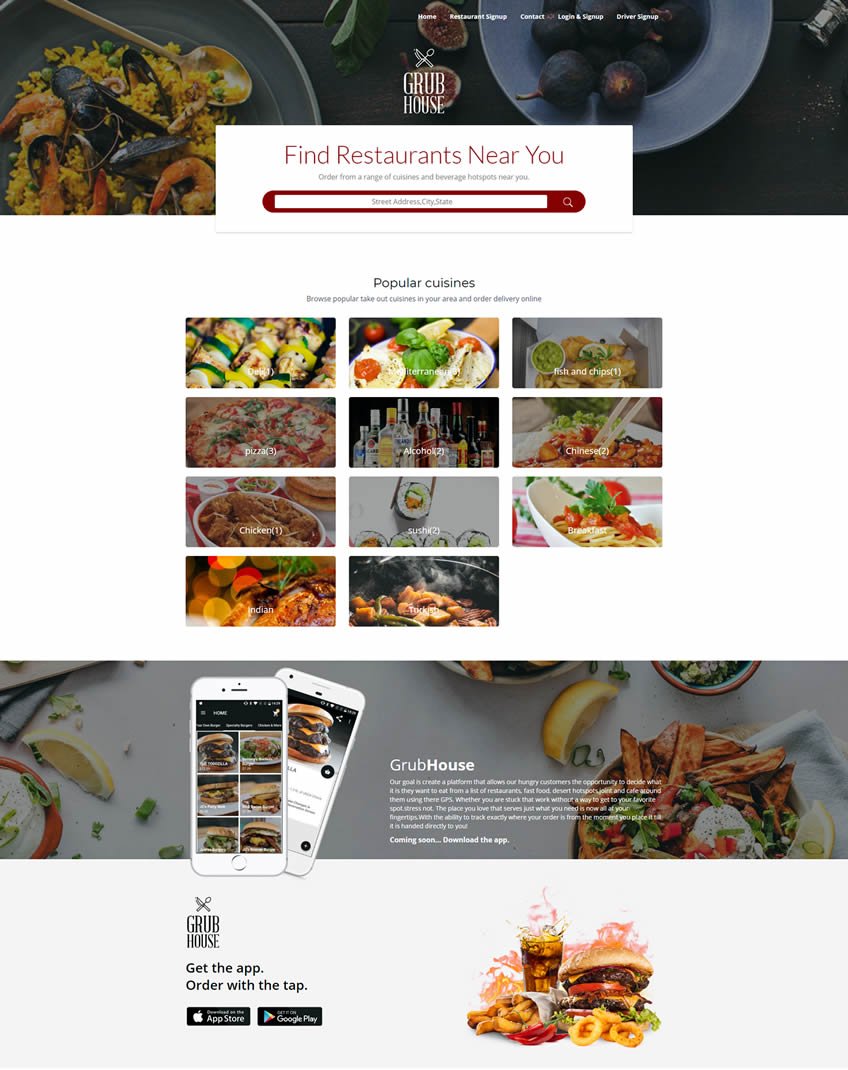
Restaurant Food ordering platforms are now a core revenue channel rather than an optional add-on. Customers expect clear menus, transparent pricing, and quick checkout experiences. Restaurants that offer direct online ordering retain more profit and customer data compared to third-party marketplaces.
A branded ordering system allows restaurants to control the entire customer journey.
Advantages of online food ordering systems for Restaurant Website:
- Customers can view menus with images, descriptions, and customization options, increasing order value.
- Integrated payment gateways allow instant and secure transactions.
- Restaurants avoid high commissions while building direct customer relationships.
Food Delivery Applications
Food delivery has shifted from being a convenience feature to a core business function. In 2026, customers prioritize speed, tracking, and reliability. A dedicated food delivery app allows restaurants to meet these expectations while maintaining operational control.
Delivery technology also helps restaurants expand their reach beyond physical locations.
Benefits of food delivery apps:
- Customers can track orders in real time, increasing trust and satisfaction.
- Restaurants manage delivery zones, fees, and timing more effectively.
- A smooth delivery experience encourages repeat orders and brand loyalty.
Centralized Order Management Systems
Managing multiple order channels manually leads to errors, delays, and staff burnout. Order management systems unify dine-in, takeaway, and delivery orders into a single dashboard, ensuring accuracy and efficiency across operations.
In 2026, centralized systems are essential for scaling without increasing overhead.
Key advantages of order management systems:
- All orders are tracked from placement to fulfillment, reducing missed or delayed orders.
- Managers gain real-time visibility into kitchen performance and order flow.
- Automation reduces dependency on manual coordination and paper-based tracking.
Self-Service Ordering Kiosks
Restaurant Self-service kiosks have become standard in quick-service and fast-casual restaurants. These systems reduce queues, increase average order value, and allow staff to focus on food preparation and customer interaction.
Kiosks also cater to customers who prefer a faster, contact-free ordering experience.
Why self-service kiosks work:
- Customers place orders quickly without waiting for staff availability.
- Upsell prompts increase sales through add-ons and meal upgrades.
- Restaurants optimize labor allocation while maintaining service quality.
Digital Inventory Management Systems
Inventory management is no longer guesswork. Digital inventory tools help restaurants track stock levels, monitor usage patterns, and prevent shortages or waste. In 2026, data-driven inventory planning is essential for cost control.
These systems integrate purchasing, forecasting, and reporting into a single workflow.
Key benefits of digital inventory tracking:
- Real-time visibility into stock levels reduces over-ordering and spoilage.
- Historical data helps predict demand and plan purchases accurately.
- Restaurants maintain consistency during peak demand periods.
Digital Menu Boards and Smart Menus
Printed menus are increasingly being replaced by digital menu boards and smart menus. These systems allow restaurants to update pricing, items, and promotions instantly without reprinting costs.
Digital menus also enhance visual appeal and personalization.
Why digital menus improve performance:
- High-quality visuals influence purchasing decisions and increase order value.
- Menus can be updated dynamically based on availability or time of day.
- Personalized suggestions improve customer engagement and satisfaction.
Kitchen Display Systems and Order Screens
Kitchen display systems replace paper tickets with real-time digital order screens. Orders are displayed clearly, reducing miscommunication and preparation errors.
These systems improve speed, accuracy, and coordination inside the kitchen.
Operational benefits of kitchen display systems:
- Orders are routed instantly to the correct preparation station.
- Staff can prioritize orders based on preparation time and delivery status.
- Reduced errors lead to faster service and fewer remakes.
Delivery Partner Management Apps
Delivery partner apps connect drivers, restaurants, and administrators in one system. These apps streamline assignment, tracking, and performance monitoring.
Customers benefit from transparency, while restaurants maintain control over fulfillment.
Key advantages of delivery partner apps:
- Real-time tracking improves delivery accuracy and customer confidence.
- Admins can assign and monitor deliveries efficiently.
- Drivers receive clear instructions, reducing delays and confusion.
Kitchen Receipt and Order Printers
Despite digital systems, kitchen printers remain essential for certain workflows. Fast, reliable receipt printers ensure orders are clearly communicated during high-volume periods.
These tools reduce errors and support smooth kitchen operations.
Why kitchen printers are still relevant:
- Clear printouts reduce misinterpretation during peak hours.
- Faster order handling improves preparation speed.
- Staff focus more on food quality and consistency.
Advantages of Using Technology in the Restaurant Business
Technology adoption directly impacts profitability, efficiency, and customer satisfaction. In 2026, restaurants that invest in digital systems operate with greater precision and agility.
Below are the key advantages of technology-driven restaurant operations.
Increased Sales and Business Growth
Digital platforms allow restaurants to reach customers instantly through search engines, social media, and direct ordering channels. Compared to traditional advertising, digital marketing is cost-effective, measurable, and scalable.
Improved Customer Support and Engagement
Automated chat systems, notifications, and self-service tools ensure customers receive timely responses and updates. Faster resolution builds trust and strengthens brand loyalty.
Better Internal Communication and Workflow
Digital tools streamline communication between front-of-house, kitchen, and delivery teams. Clear workflows reduce errors, improve morale, and increase operational consistency.
Data-Driven Decision Making
Technology enables restaurants to analyze customer behavior, order patterns, and peak hours. These insights help optimize menus, pricing, staffing, and promotions.
Enhanced Customer Experience
From ordering to delivery, digital touchpoints create a seamless and engaging experience. Customers value speed, transparency, and convenience—and technology delivers all three.
Final Thoughts: Technology as a Growth Engine in 2026
In 2026, technology is no longer optional for restaurant businesses—it is a competitive necessity. Restaurants that invest in the right digital infrastructure gain efficiency, customer loyalty, and long-term scalability.
By adopting modern restaurant technology solutions, food businesses can future-proof operations, increase profitability, and deliver experiences that today’s customers expect.