Top 10 Points how online food delivery business work in 2026
- 09.01.2026
- By: Foodappsco
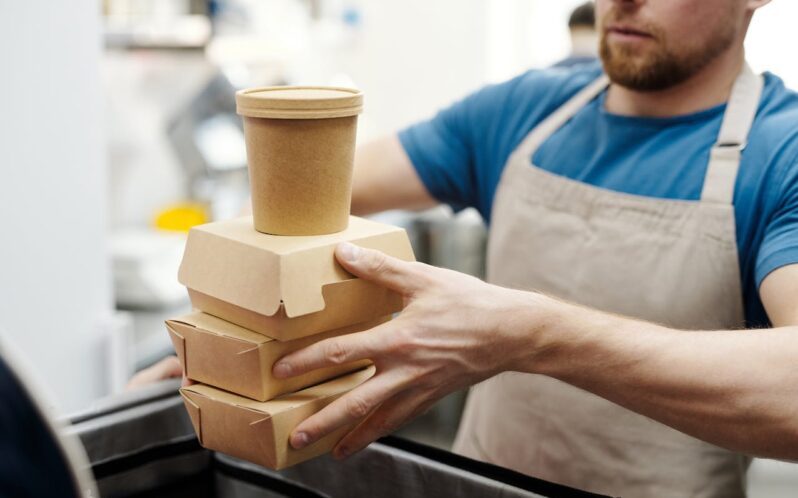
Starting an online food delivery business in 2026 can be a strong opportunity—especially if your goal is to support nearby restaurants while building a scalable local platform. Today’s customers expect fast ordering, real-time tracking, flexible payments, and reliable delivery experiences. The good news is that modern systems automate most of the workflow, so even a lean team can operate professionally.
In this guide, you’ll learn the end-to-end workflow of how a modern Food Delivery Marketplace operates, and how White Label Food Delivery Apps make it easier to launch and scale without building everything from scratch.
1. Merchant and Restaurant Registration
The first step in any delivery marketplace is onboarding restaurants. In 2026, restaurant owners prefer quick registration, clear commercial terms, and easy menu setup. A strong onboarding process helps you grow supply (restaurants) faster, which directly increases customer choice and improves repeat usage of your platform.
- Restaurant onboarding is your supply engine. More restaurants means more variety, better coverage, and higher chances that customers find what they want. In competitive markets, “choice” is one of the biggest conversion drivers.
- Modern onboarding is semi-automated. Restaurants can self-register, upload documents, configure delivery zones, and choose payouts through a merchant panel, reducing your operational workload.
2. Restaurant Profile and Listing Setup
After registration, the restaurant listing is created on the marketplace: brand profile, cuisine type, operational hours, delivery radius, minimum order, preparation time, and promotions. In 2026, listings must look premium because customers decide quickly based on images, clarity, and trust signals.
- Menu quality impacts revenue. High-quality food images, accurate descriptions, and proper categorization improve conversions and increase average order value by making selection easier.
- Availability and timing are critical. Restaurants must maintain accurate “open/closed” status, prep time, and item availability; otherwise cancellations increase and ratings drop.
3. Customers Discover the Platform via Web and Mobile Apps
Customers typically discover your marketplace through local search, social media, influencer content, referrals, and map-based discovery. In 2026, successful operators treat the platform like a local brand, not just an ordering tool. Your website and mobile apps must load fast and feel trustworthy.
- Mobile-first is non-negotiable. Most orders come from phones, so the app experience must be smooth—simple browsing, fast checkout, and clear delivery ETA.
- Local SEO and maps drive intent traffic. Google Business listings, local landing pages, and “near me” search optimization are often higher ROI than broad generic ads.
4. Customers Browse, Search, and Build the Cart
Once users enter the platform, they search by cuisine, restaurant name, offers, distance, ratings, and delivery speed. In 2026, personalization also matters—showing relevant restaurants based on location, order history, and trending items improves conversion.
- Search and filters are revenue features. Smart filters (delivery time, price range, dietary options) reduce decision friction, which increases order completion rates.
- Upsells happen naturally in the cart. Recommended add-ons, combos, and “frequently bought together” prompts increase average basket size without aggressive selling.
5. Checkout, Payments, and Order Confirmation
In 2026, customers expect flexible payments: cards, wallets, Apple Pay/Google Pay, local payment methods, and cash-on-delivery where relevant. Once payment is completed (or COD is selected), the system confirms the order and locks the restaurant workflow.
- Payment reliability reduces support load. A smooth payment flow reduces abandoned carts and minimizes manual customer support for failed transactions.
- Order confirmation sets customer expectations. Clear delivery time estimates, order summaries, and status updates increase trust and reduce cancellation requests.
6. Order Routing to the Restaurant in Real Time
After confirmation, the system routes the order to the restaurant instantly through a merchant tablet, POS integration, or merchant mobile app. In mature operations, orders are also printed automatically in the kitchen to reduce manual errors.
- Real-time routing prevents delays. Faster restaurant acknowledgment improves delivery times and customer satisfaction, which directly affects reviews and repeat orders.
- Kitchen workflow must be simple. Clear item details, modifiers, and special instructions reduce mistakes that cause refunds and negative ratings.
7. Restaurant Accepts, Prepares, and Updates Status
The restaurant either accepts or rejects the order based on capacity and availability. Once accepted, the kitchen prepares the items and updates order status through defined steps such as “accepted,” “preparing,” and “ready for pickup.” These updates are visible to customers.
- Status transparency reduces customer anxiety. Customers are more patient when they see progress updates, which reduces “where is my order?” support calls.
- Preparation timing affects delivery efficiency. If prep time is inaccurate, drivers wait too long or arrive too early, harming the unit economics of delivery.
8. The Platform Assigns the Nearest Available Driver
While the food is being prepared, the platform identifies the best available driver based on GPS location, driver availability, delivery capacity, and estimated time to reach the restaurant. This is where automation creates massive operational advantages in 2026.
- Driver allocation improves unit economics. Efficient assignment reduces idle time, increases deliveries per hour, and improves on-time performance.
- Driver apps power real-time operations. Drivers receive pickup tasks, navigation, customer contact details, and delivery instructions directly inside the app.
9. Pickup, Live Tracking, and Proof of Delivery
The driver navigates to the restaurant, confirms pickup, and begins delivery to the customer’s address. Customers can track the driver on a live map. At delivery, proof mechanisms such as PIN confirmation, signature, or photo delivery confirmation reduce disputes.
- Live tracking is now a customer expectation. It improves perceived reliability and reduces cancellations, especially when delivery times are longer than average.
- Proof of delivery protects both parties. PIN/photo confirmation reduces fraudulent claims and simplifies support resolution when issues occur.
10. Delivery Completion, Ratings, Reviews, and Continuous Optimization
After delivery, the customer rates both the restaurant and the driver. These reviews become public trust signals and help improve marketplace quality. In 2026, successful platforms actively analyze feedback to improve menu quality, delivery performance, and overall customer experience.
- Ratings directly influence conversions. Restaurants with better reviews typically get more orders; platforms often use reviews to rank listings and reward top performers.
- Feedback becomes operational data. Patterns in complaints (late delivery, missing items, cold food) help you improve processes, update prep times, and enforce standards.
Conclusion: The 2026 Food Delivery Workflow Is Built for Automation and Scale
Online food delivery in 2026 is highly system-driven. From restaurant onboarding to order routing, driver assignment, live tracking, and reviews—everything is designed to run through structured stages, keeping customers informed and operations controlled. The strongest platforms focus on speed, transparency, and consistency rather than trying to do everything manually.
If you want to launch quickly without heavy development costs, a ready platform is the practical approach. A modern Food Delivery Marketplace solution with White Label Food Delivery Apps helps you go live faster, onboard restaurants efficiently, and run a professional operation from day one under your own brand.
Looking to start your own platform? Explore FoodAppsco’s ready-made marketplace system and launch your branded delivery business with full ownership, scalable features, and everything needed to manage customers, restaurants, and drivers in one ecosystem.




Amazing Article! Really informative!
We provide AI-powered Delivery Management Software can you check it out?