How much does it cost to start a food delivery business?
- 15.01.2026
- By: Foodappsco

The Thriving Landscape of Food Delivery Marketplace Business in 2026
The culinary world has undergone a radical transformation, moving toward a “Me-Me-Me Economy” where hyper-personalization is the standard. In 2026, a Food delivery marketplace business is no longer just a luxury; it is the primary bridge between a hungry populace and the modern digital kitchen.
With global online food revenue projected to surpass $1.4 trillion, the opportunity for new entrepreneurs has never been more lucrative. Customers now expect frictionless experiences, ranging from AI-driven recommendations to real-time tracking, making high-quality food delivery marketplace applications the essential infrastructure for any aspiring food aggregator looking to scale.
Understanding the Modern Technology Ecosystem
To successfully launch a platform that competes with giants like UberEats or DoorDash, you must consider the depth of your tech stack. A Food app development company typically provides a suite of integrated tools designed to harmonize the relationship between customers, restaurant partners, and the delivery fleet.
Investing in the right technology early prevents the costly “re-platforming” that many startups face when they outgrow basic systems. Modern solutions must handle high-concurrency traffic, manage complex logistics, and provide deep data insights, all while maintaining a user-friendly interface that keeps diners coming back for more, day after day.
Critical Tech Solutions for Growth-Oriented Businesses
A robust delivery network is built on several specialized software pillars. Each component serves a unique user group, ensuring that orders are placed accurately, prepared quickly, and delivered efficiently. Without these synchronized tools, operational bottlenecks can quickly erode your profit margins and damage your brand’s reputation.
In 2026, “Quick Commerce” or Q-Commerce has become the norm, requiring systems that can handle rapid-fire transactions and lightning-fast dispatching. When you partner with a specialized Food app development company, they provide the following essential modules to ensure your business operates at peak efficiency from day one.
The Essential Tech Stack Components
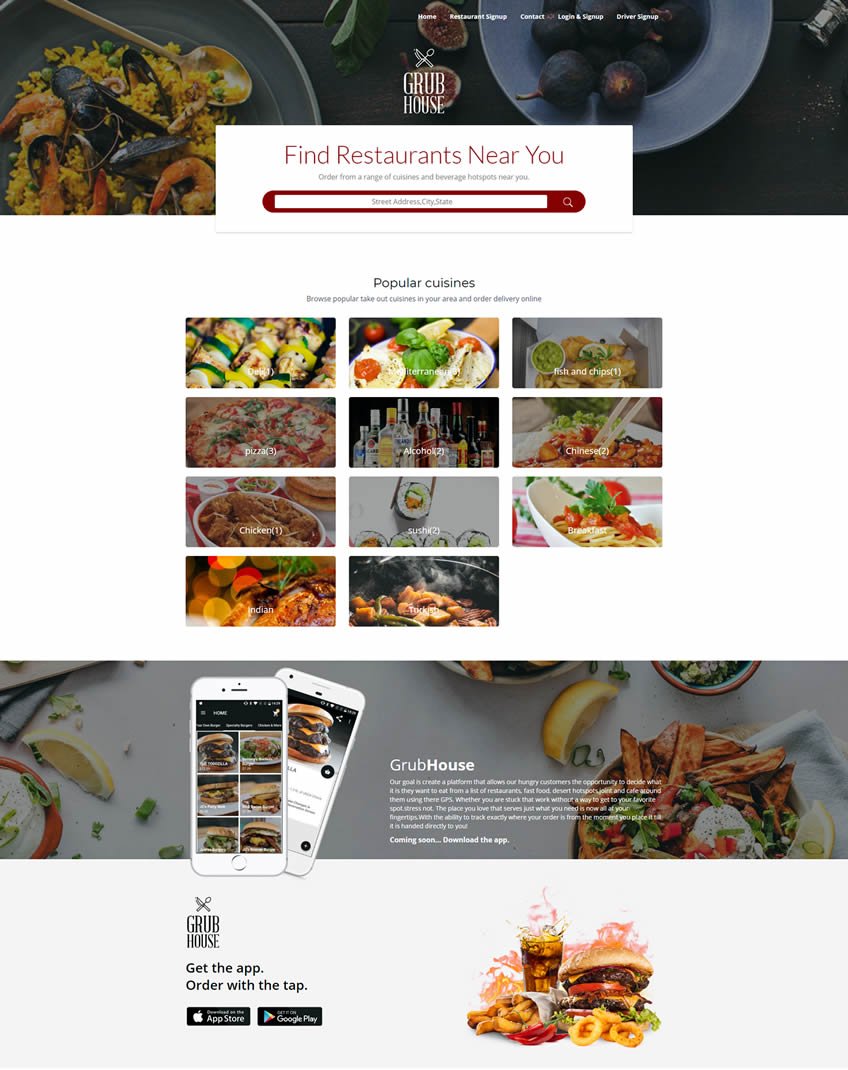
- Multi-Restaurant Ordering Website: A high-performance, mobile-responsive portal for desktop users and SEO visibility.
- Customer Mobile Apps (iOS & Android): Native applications designed for high retention with integrated loyalty programs.
- Merchant Web Backends: Dedicated dashboards for restaurants to manage menus, pricing, and specific branch operations.
- Master Admin Panel: The central nervous system for platform owners to control users, drivers, and financial settlements.
- Logistics Console: A web-based “command center” for real-time fleet tracking, heatmaps, and manual dispatching overrides.
- Driver Mobile Apps: GPS-integrated tools that provide optimized routing and earnings transparency for couriers.
- Restaurant Order Manager: Tablet-optimized apps for kitchen staff to accept, snooze, or print orders instantly.
Analyzing the Variables of Development Costs
The total investment required to launch food delivery marketplace applications varies significantly based on your chosen path to market. Entrepreneurs generally face a choice between custom-coded solutions and pre-engineered, ready-to-use platforms. Each path has distinct implications for your budget, timeline, and long-term scalability goals.
Custom development offers total creative freedom but carries a high entry price and a lengthy development cycle. Conversely, ready-to-use solutions allow for immediate market entry at a fraction of the cost. Understanding these financial variables is the first step in building a sustainable business model in the competitive food delivery sector.
Ready-to-Use Solutions vs. Custom Development
For most startups in 2026, speed to market is the ultimate competitive advantage. Ready-to-use food delivery marketplace applications are pre-tested, secure, and feature-rich. These solutions are often 80-90% more cost-effective than building from scratch because the development costs are shared across a wide client base.
Custom development, while prestigious, often leads to “feature creep” and unexpected technical debt. If you are looking to validate your business model or launch quickly in a specific city, a ready-made platform from an experienced Food app development company provides the fastest return on investment without compromising on quality.
Estimated Investment Comparison Table
| Development Approach | Estimated Cost (USD) | Time to Market | Best For |
|---|---|---|---|
| Ready-to-Use Solution | $1,999 – $3,000 | 1 – 2 Weeks | Startups & MVPs |
| Custom Development (Offshore) | $15,000 – $35,000 | 4 – 6 Months | Niche Innovations |
| Custom Development (Western) | $60,000 – $150,000+ | 6 – 12 Months | Enterprise Scaling |
| Modular Hybrid Approach | $5,000 – $12,000 | 1 – 2 Months | Regional Franchises |
Geographic Location of the Development Team
The globalized nature of tech means that the “where” of your development team impacts the “how much.” Teams in North America and Western Europe have the highest hourly rates, often ranging from $100 to $250. This can push the cost of a basic marketplace build into the six-figure range quickly.
In contrast, an Indian Food app development company can deliver the same high-caliber technology for a fraction of the price. Due to lower operational overheads, these teams offer competitive rates while maintaining international standards for security and UI/UX design, making them the preferred choice for global startups.
Feature Complexity and Its Financial Impact
Every “advanced” feature added to your Food delivery marketplace business roadmap increases the development hours and the final bill. While basic ordering is standard, 2026 trends like AI-powered voice ordering, drone delivery integrations, or augmented reality (AR) menus require specialized engineering talent.
Startups are advised to launch with a “Minimum Viable Product” (MVP) that covers the core essentials: search, order, pay, and track. Once the revenue begins to flow, the platform can be incrementally upgraded with advanced features based on actual customer feedback rather than speculative assumptions about user behavior.
Marketing and Operational Launch Budgets
Your tech investment is only one half of the equation. A successful Food delivery marketplace business must also budget for merchant acquisition and customer growth. In 2026, the cost of acquiring a single customer (CAC) can range from $20 to $50, depending on the local market competition.
Additionally, you must account for “soft costs” such as brand identity design, legal entity setup, and licensing. Many entrepreneurs overlook the importance of a professional launch campaign, which is vital for building the initial momentum needed to attract high-quality restaurant partners to join your platform over competitors.
Typical Pre-Launch Expense Breakdown
- Legal & Permits: $500 – $2,000 for business registration and health compliance.
- Branding & UI Assets: $1,000 – $5,000 for professional logos and marketing collateral.
- Initial Marketing Push: $5,000 – $15,000 for social media ads and local influencer partnerships.
- Operational Contingency: $2,000 – $5,000 for unforeseen server or hosting spikes during launch.
The Role of Data and AI in Reducing Long-Term Costs
While technology has an upfront cost, the right food delivery marketplace applications eventually pay for themselves through operational efficiency. AI-driven route optimization, for example, can reduce fuel costs and delivery times by up to 25%, allowing your fleet to complete more orders per hour.
Furthermore, predictive analytics allow platform owners to anticipate demand spikes. By knowing exactly when a “rush” is coming, you can incentivize more drivers to be online, preventing the “unfulfilled order” scenario that leads to customer churn and lost revenue. Data is the key to turning a high-volume business into a high-profit business.
Scalability: Growing from Local to National
A major benefit of high-quality food delivery marketplace applications is the ability to scale without physical overhead. Once your technology is established in one city, expanding to a second or third location involves minimal technical effort. Most modern backends allow for “Multi-City” management from a single dashboard.
This scalability makes the food delivery model highly attractive to investors. By focusing on a “Ready to use” solution initially, you can demonstrate proof of concept and positive unit economics quickly, making it much easier to secure the venture capital needed for aggressive national or international expansion later.
Conclusion: The Smartest Path to Market Entry
Starting a Food delivery marketplace business in 2026 is a strategic balance between technical excellence and financial prudence. While custom builds offer total control, the most successful entrepreneurs today prioritize speed and efficiency by utilizing high-quality, pre-built frameworks that allow them to start earning immediately.
By choosing a Ready to use Food Delivery marketplace platform from a reputable Food app development company like FoodappsCo, you can launch a professional, feature-rich service for as little as $1,999. This allows you to preserve your capital for what truly matters: marketing your brand and building a loyal community of diners and partners.