Food Delivery Marketplace Business Model: How Much Can You Earn?
Introduction to the Food Delivery Marketplace Business Model
The food delivery marketplace business model has become one of the most attractive opportunities for entrepreneurs looking to tap into the booming on-demand economy. At its core, this model involves creating a digital platform that connects hungry customers with a variety of local restaurants, while facilitating seamless deliveries through independent drivers.
Unlike traditional restaurants that handle their own orders, a food delivery marketplace acts as an aggregator, earning revenue from every transaction without the need to own kitchens or delivery fleets. This intermediary role allows for scalable growth, making it ideal for startup founders and local business operators who want to launch a platform similar to UberEats or DoorDash.
For those evaluating this business, understanding the potential earnings is crucial. A well-managed food delivery marketplace can generate substantial income through multiple revenue streams, turning a local operation into a profitable venture. In this guide, we’ll explore how much you can earn, breaking down monetization strategies with practical examples.
We’ll also discuss the Food Delivery Marketplace Cost and why opting for a Ready Food Delivery Marketplace Solution can make launching easier and more cost-effective. Whether you’re in a small town or a bustling city, this model offers flexibility to adapt to your market’s needs, focusing on earnings potential from day one.
Why Local Food Delivery Marketplaces Are Growing Rapidly
The rapid growth of local food delivery marketplaces is driven by shifting consumer behaviors and technological advancements. With more people working remotely or leading busy lifestyles, the demand for convenient meal options has surged. Statistics show that the global food delivery market is expected to reach over $300 billion by 2027, with local platforms capturing a significant share by offering personalized experiences that big players can’t always match.
Entrepreneurs are drawn to this because it allows them to focus on niche markets, such as organic foods or ethnic cuisines, which can lead to higher customer loyalty and better margins.
Local marketplaces also benefit from community trust, as they partner with familiar restaurants and employ local drivers. This hyper-local approach reduces delivery times and costs, enhancing user satisfaction and repeat business. For startup founders, the low barrier to entry—especially with a Multi-Restaurant Food Delivery Marketplace Solution—means you can start small and scale as demand grows. The key to profitability lies in diversifying revenue streams, which we’ll detail later, ensuring your platform isn’t reliant on just one income source.
As more consumers prioritize sustainability and local sourcing, these marketplaces are positioned for even faster expansion, making now an ideal time to enter the market and capitalize on earnings opportunities.
How a Multi-Restaurant Food Delivery Marketplace Solution Works
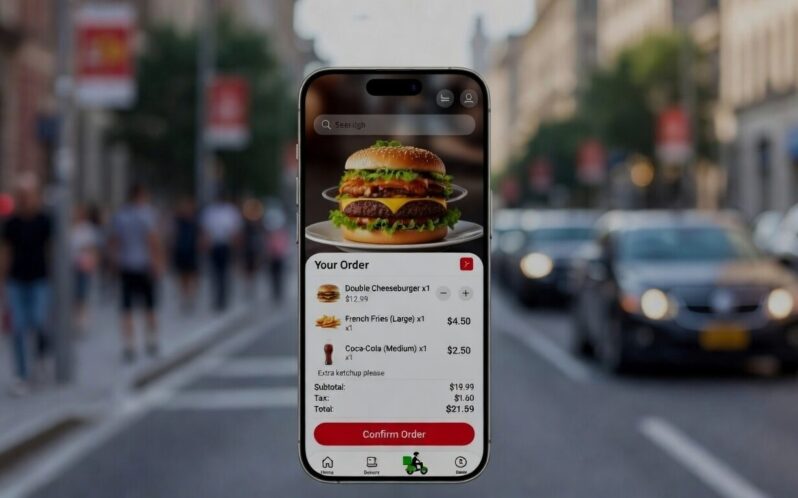
A Multi-Restaurant Food Delivery Marketplace Solution operates by integrating multiple eateries into a single app or website, where customers can browse menus, place orders, and track deliveries in real-time. The platform owner doesn’t prepare food or handle logistics directly; instead, they facilitate connections between users, restaurants, and drivers.
This creates a network effect: more restaurants attract more customers, leading to higher order volumes and increased earnings for the owner.
From a business perspective, the model emphasizes monetization at every step. Restaurants upload their menus and manage orders through a dedicated dashboard, while drivers use a separate app to accept gigs. The platform collects fees automatically, streamlining cash flow. For entrepreneurs, using a Ready Food Delivery Marketplace Solution simplifies setup, as it includes built-in features like payment gateways, GPS tracking, and analytics tools.
This allows you to focus on marketing and partnerships rather than coding, accelerating your path to profitability. Understanding the Food Delivery Marketplace Cost upfront helps in budgeting, ensuring your investment aligns with projected revenues from diverse streams.
Main Revenue Streams in a Food Delivery Marketplace
In a food delivery marketplace, revenue diversification is essential for long-term success. By leveraging multiple monetization strategies, owners can maximize earnings while providing value to all stakeholders. Below, we outline the primary revenue streams, complete with practical examples to illustrate how they contribute to your bottom line. These methods allow for flexible pricing, adapting to market conditions and scaling as your platform grows.
- Restaurant commission fees: This is the cornerstone of earnings, where you charge restaurants a percentage of each order value, typically 15-30%. For example, on a $40 order, a 20% commission yields $8. In a marketplace with 500 monthly orders averaging $35, this could generate $3,500 in commissions alone, scaling exponentially with more partners.
- Delivery service charges: Customers pay a flat or distance-based fee for delivery, often $3-7 per order. You retain a portion after paying drivers, say 30-50%. If 1,000 orders incur $5 fees each, and you keep $2 per order, that’s $2,000 monthly. This stream provides consistent income, especially in high-demand areas.
- Restaurant onboarding or setup fees: Charge new restaurants a one-time fee for joining, ranging from $100-500 to cover verification and menu setup. For 20 new sign-ups per month at $200 each, this adds $4,000. It’s a low-effort way to monetize growth without ongoing costs.
- Featured restaurant promotion fees: Restaurants pay $50-200 monthly to appear at the top of search results or in promotional banners. With 10 featured spots at $100 each, you earn $1,000 recurring revenue. This boosts visibility for them and your earnings through premium placements.
- Subscription plans for restaurants: Offer tiered plans, like basic ($49/month) for standard listing or premium ($199/month) with analytics and priority support. If 50 restaurants subscribe at an average $100, that’s $5,000 monthly. This creates predictable, recurring income, stabilizing cash flow.
- Delivery driver service margin: Earn a margin on driver payouts by charging a small fee per gig or through partnerships. For instance, if drivers earn $10 per delivery and you add a 10% service fee, on 2,000 deliveries, this nets $2,000. It capitalizes on the gig economy without direct employment.
- Advertising placements inside the app: Sell ad space to non-competing brands, like beverage companies, for $500-2,000 per campaign. With app traffic of 10,000 users, a monthly ad deal could bring $1,500. This leverages user data for targeted ads, adding high-margin revenue.
- Surge pricing or peak delivery fees: Implement dynamic pricing during busy times, adding $1-3 extra per order. During dinner rush with 300 orders, a $2 surge yields $600 nightly. This optimizes earnings during high demand, similar to ride-sharing models.
- White-label licensing or city operator partnerships: License your platform to other operators in new cities for $5,000-20,000 upfront plus royalties. Partnering with one franchisee at $10,000 annually adds expansion revenue without full operational control.
Combining these streams, a mid-sized marketplace could see $20,000+ monthly earnings. The key is balancing fees to avoid alienating partners while using data to optimize pricing.
Example Monthly Revenue Scenario for a Small City Marketplace
In a small city with 100,000 residents, a food delivery marketplace might start modestly but grow steadily. Assume 50 partnered restaurants, 2,000 monthly orders at $30 average value, and a mix of revenue streams. Restaurant commissions at 20% generate $12,000 (2,000 x $30 x 0.20). Delivery charges of $4 per order, with $1.50 retained, add $3,000. Onboarding five new restaurants at $200 each brings $1,000.
Featured promotions from 10 restaurants at $100/month yield $1,000, while basic subscriptions from 20 at $50/month add $1,000. Driver margins on 2,000 deliveries at $1 each contribute $2,000. App ads from local sponsors net $500, and occasional surge fees during weekends add $800. Total monthly revenue: approximately $21,300. After costs like marketing ($3,000) and operations ($5,000), net profit could be $13,300, demonstrating viable earnings even in smaller markets using a Multi-Restaurant Food Delivery Marketplace Solution.
Example Revenue Scenario for a Medium Size City
For a medium-sized city of 500,000 people, scale increases with 200 restaurants and 10,000 monthly orders at $35 average. Commissions at 22% produce $77,000 (10,000 x $35 x 0.22). Delivery fees of $5, retaining $2, add $20,000. Onboarding 15 restaurants at $300 each generates $4,500.
Featured fees from 30 restaurants at $150/month bring $4,500, subscriptions from 100 at $100 average yield $10,000. Driver margins at $1.50 per delivery net $15,000. Advertising deals worth $3,000 monthly, surge pricing on 20% of orders at $2 extra adds $7,000. White-label partnerships with two nearby towns at $2,000 each contribute $4,000. Total: around $145,000 monthly. Deducting higher costs ($40,000), profits hit $105,000, showcasing how a Ready Food Delivery Marketplace Solution amplifies earnings in growing markets.
Example Revenue Scenario for a Large Metro Marketplace
In a large metro with millions, expect 500+ restaurants and 50,000 orders at $40 average. Commissions at 25% generate $500,000 (50,000 x $40 x 0.25). Delivery charges of $6, keeping $2.50, add $125,000. Onboarding 50 restaurants at $400 each yields $20,000.
Featured promotions from 100 at $200/month bring $20,000, premium subscriptions from 300 at $150 average add $45,000. Driver margins at $2 per delivery net $100,000. App ads from major brands fetch $10,000, surge fees on 30% of orders at $3 extra generate $45,000. Licensing to five operators at $10,000 each adds $50,000. Total revenue: over $915,000 monthly. After substantial costs ($300,000), net earnings exceed $615,000, highlighting massive potential with strategic monetization in urban settings.
Understanding Food Delivery Marketplace Cost Before Launch
Before diving in, grasping the Food Delivery Marketplace Cost is vital for budgeting. Initial expenses include platform development, marketing, and legal fees. A custom build might cost $50,000-200,000, but a Ready Food Delivery Marketplace Solution reduces this to $10,000-50,000. Ongoing costs like server hosting ($500/month) and app maintenance add up.
Entrepreneurs often ask, How Much Does It Cost for Ready Food Delivery Marketplace Apps? Typically, it’s affordable, with packages including features for quick ROI. Factoring in the Food Delivery Marketplace Cost ensures your revenue streams cover expenses, leading to profitability within 6-12 months.
Why Entrepreneurs Prefer a Ready Food Delivery Marketplace Solution
Entrepreneurs favor a Ready Food Delivery Marketplace Solution for its speed and reduced risk. Custom development can take 6-12 months, delaying earnings, while ready platforms launch in weeks. This minimizes technical hurdles, allowing focus on monetization like commissions and ads.
With pre-built tools for revenue management, it streamlines operations. Addressing How Much Does It Cost for Ready Food Delivery Marketplace Apps?, it’s cost-effective, avoiding high dev fees and enabling faster break-even through diverse income streams.
Custom App Development vs Ready Marketplace Platform
Custom app development offers full customization but at a steep price—$100,000+ and 9+ months, with risks of bugs delaying launches. Revenue potential is high, but initial costs eat into early earnings.
A ready platform, like a Multi-Restaurant Food Delivery Marketplace Solution, costs less ($20,000-60,000) and launches faster (1-3 months), with lower risk via proven tech. It supports all revenue streams out-of-the-box, making it preferable for most startups evaluating Food Delivery Marketplace Cost.
How Fast You Can Launch Using a Ready Platform
Using a Ready Food Delivery Marketplace Solution, launch can occur in 4-8 weeks. Steps include customizing branding, integrating payments, and onboarding restaurants. This speed accelerates revenue generation from commissions and fees.
Compared to custom builds, it cuts time by 80%, allowing quick market testing. Knowing How Much Does It Cost for Ready Food Delivery Marketplace Apps? helps plan, ensuring monetization starts sooner.
Tips to Maximize Earnings from Your Marketplace
To boost earnings, optimize restaurant partnerships for higher commissions by offering value like marketing tools. Implement dynamic pricing for surges and promotions to increase order values. Use data analytics to target ads effectively, enhancing revenue from placements.
Diversify with subscriptions and white-label options for recurring income. Focus on user retention through loyalty programs, driving more transactions. Regularly review Food Delivery Marketplace Cost to control expenses, maximizing margins across all streams.
Conclusion: Is a Food Delivery Marketplace a Profitable Business?
Yes, a food delivery marketplace is highly profitable when executed with strong monetization strategies. From commissions to ads, diverse streams can yield $20,000-$900,000+ monthly, depending on scale. With low entry via a Ready Food Delivery Marketplace Solution, entrepreneurs can achieve quick returns, making it a smart choice for sustainable earnings.
About FoodAppsCo™ – White Label Delivery Apps Provider
FoodAppsCo™ is a leading provider of white label delivery apps and multi-restaurant marketplace platforms designed to empower entrepreneurs and local business operators. Their customizable solutions enable you to launch a branded food delivery marketplace quickly, complete with features for managing revenue streams like commissions, subscriptions, and ads. With a focus on scalability and affordability, FoodAppsCo™ helps reduce the Food Delivery Marketplace Cost while maximizing earning potential, making it easier to build a profitable on-demand business tailored to your market.