How Much Does It Cost to Start a Food Delivery Marketplace in 2026?
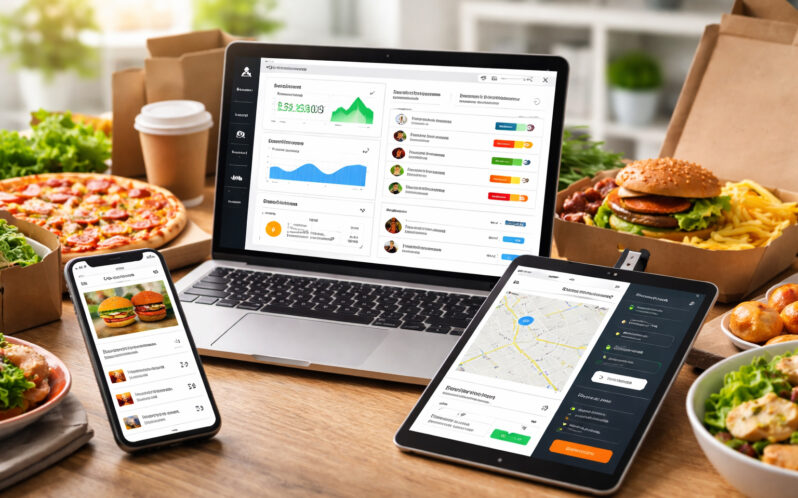
When people ask about the cost of starting a food delivery marketplace, they usually think of app development alone. In reality, cost is broader — it includes getting live, running daily operations, and acquiring your first customers, not just building software.
Understanding this early helps you avoid surprises and makes planning far more comfortable.
Cost Is Not Paid All at Once
One reassuring fact for new operators is that you don’t need to invest everything upfront. Marketplace businesses naturally split costs into phases.
- Setup costs These are one-time expenses that help you launch. Once paid, they don’t repeat and don’t grow with usage.
- Monthly operating costs These cover hosting, support, delivery handling, and marketing. They scale gradually as orders increase.
This phased structure is why many local marketplaces remain financially manageable.
Technology Is Only One Part of the Budget
In 2026, technology is no longer the biggest financial barrier. With a ready made food delivery marketplace solution, most of the heavy technical work is already done.
What matters more is:
- how you operate the platform,
- how efficiently you onboard restaurants,
- and how well you manage daily execution.
This shift is what makes starting today less risky than it was a few years ago.
Why Country and City Matter
Costs feel different depending on where you operate.
For example:
- In Germany, the UK, and Northern Europe, labor costs are higher but customer retention is stronger.
- In Southern Europe, operating costs are lower, but margins are more price-sensitive.
- In many Middle Eastern cities, growth can be fast when launched zone by zone.
The good news is that a flexible food delivery marketplace system adapts well to all of these environments when launched locally first.
A Simple Mental Model to Remember
Instead of asking:
❌ “How expensive is a food delivery marketplace?”
Ask:
✅ “How much do I need to start small, run comfortably, and grow step by step?”
This mindset alone removes most of the fear around costs.
The 3 Marketplace Models
(And Which One Feels Safest to Start With)
Before talking about numbers, it helps to understand how food delivery marketplaces usually start in the real world. In 2026, there are three common models. You don’t need to master all of them — you only need to pick the one that feels manageable for your first step.
Choosing the right model early makes the cost discussion far more relaxed.
1. Local City Marketplace (Most Comfortable Starting Point)
This is where most successful marketplaces begin.
A local city marketplace focuses on one city or a few nearby zones, keeping everything simple and under control. You work with a limited number of restaurants and build demand gradually instead of forcing rapid growth.
Typical characteristics:
- Restaurants are onboarded personally or locally This builds trust and reduces churn, especially in cities across Germany, the UK, Spain, Italy, and France.
- Delivery can start simple Many platforms allow restaurants to deliver themselves at first, which avoids the cost and complexity of managing drivers.
- Marketing stays local You rely more on partnerships and local visibility than expensive national campaigns.
This model works extremely well with a ready made food delivery marketplace solution, because speed and stability matter more than custom features.
2. Multi-Zone or Regional Marketplace (Natural Second Step)
Once your first city runs smoothly, expanding to additional zones or nearby cities becomes a logical next move.
At this stage:
- operational processes are already tested,
- restaurant onboarding is faster,
- and marketing spend becomes more efficient.
Costs increase, but in a predictable way, because you are building on something that already works. Many operators in Europe and the Middle East follow this path city by city, instead of scaling too quickly.
Importantly, this model is usually grown into, not chosen on day one.
3. Large Aggregator Model (Not Required to Succeed)
This is the model people often think of first, because global platforms follow it. However, it is not a requirement for building a profitable food delivery business.
This approach focuses on:
- large-scale customer acquisition,
- heavy discounting,
- and high delivery volume.
While it can work with enough capital, it also brings higher pressure and complexity. For first-time or local operators, this model is usually unnecessary and avoidable.
The reassuring truth is that most profitable marketplaces never operate this way.
A Quick Comparison for Clarity
| Model | Best For | Cost Comfort Level |
|---|---|---|
| Local city marketplace | First-time & local operators | Very comfortable |
| Multi-zone marketplace | Growing businesses | Moderate, predictable |
| Large aggregator | Venture-funded platforms | High pressure |
Why This Choice Reduces Cost Anxiety
When you start with a local or phased model, you:
- limit upfront spending,
- keep monthly costs under control,
- and learn the business before expanding.
This is why a flexible food delivery marketplace system matters more than a complex one. It allows you to grow at your own pace instead of forcing decisions too early.
Realistic Cost Ranges in 2026 (What Most Businesses Actually Spend)
Once the starting model is clear, the cost picture becomes much simpler. In 2026, most food delivery marketplaces do not start with extreme budgets. They start with controlled, realistic spending that allows them to launch, learn, and improve without pressure.
The important thing to remember is that these costs are ranges, not fixed numbers. Your final budget depends on how focused your launch is, not how ambitious your long-term vision might be.
A Calm Overview of Typical Costs
For most local and regional operators using a ready made food delivery marketplace solution, the overall cost fits into three practical bands.
| Launch Stage | One-Time Cost | Monthly Cost |
|---|---|---|
| Focused local launch | €4,000 – €9,000 | €2,000 – €5,000 |
| Multi-zone growth | €8,000 – €20,000 | €5,000 – €15,000 |
| Custom build (optional) | €50,000+ | €3,000+ |
Most new businesses start in the first row, stay there for a few months, and move up only when revenue and demand justify it.
Why These Numbers Feel Manageable
These cost ranges may look significant at first glance, but they are not paid all at once and not all mandatory from day one.
A focused launch typically means:
- a single city or limited zones,
- a controlled number of restaurants,
- minimal delivery complexity at the beginning.
This approach keeps both one-time and monthly costs aligned with real usage.
One-Time Costs: What You Pay to Get Live
One-time costs are mainly about getting your marketplace ready to operate, not about ongoing spending.
They usually include:
- access to the food delivery marketplace solution,
- configuration for your city, currency, and rules,
- basic branding and setup,
- payment and notification integration.
Because these costs don’t repeat, they give clarity and peace of mind early on.
Monthly Costs: What Grows Gradually
Monthly expenses exist to support real activity on your platform. They grow as orders grow, not before.
These costs typically cover:
- hosting and system reliability,
- basic customer and restaurant support,
- marketing and visibility,
- delivery handling where applicable.
The benefit of a flexible food delivery marketplace system is that you can keep these costs low until demand increases.
A Helpful Perspective
Instead of asking whether these costs are “high” or “low,” it’s better to ask:
Can I comfortably support this level of spending while building steady order volume?
For most local marketplaces, the answer is yes — especially when starting focused and scaling gradually.
Great — continuing smoothly, same balanced, calm, readable style.
One-Time Costs to Start a Food Delivery Marketplace
One-time costs are the expenses that help you get live and operational. The good part is that these costs are predictable, finite, and do not repeat every month. Once paid, you can focus on running and growing the business instead of worrying about ongoing setup charges.
In 2026, these costs are much easier to manage thanks to mature, ready platforms.
Marketplace Platform Access
This is the foundation of your business. A complete food delivery marketplace solution already includes the essential building blocks needed to operate a real marketplace.
Instead of developing everything from scratch, you get:
- a central admin panel to control the platform,
- dashboards for restaurants to manage orders and menus,
- customer ordering interfaces (web or PWA),
- and delivery or order-management workflows.
Because this is a ready made food delivery marketplace solution, the cost is usually a one-time license, not an ongoing dependency. This gives many first-time operators peace of mind.
Platform Setup and Configuration
Even the best system needs to be adjusted to your local market. Setup and configuration turn a generic platform into your marketplace.
This typically involves:
- defining your city or service zones,
- setting commission and delivery rules,
- configuring currency, taxes, and payments,
- and aligning the platform with your business flow.
This step is not heavy technical work. It is structured setup, and once completed, it rarely needs major changes.
Branding and Basic Identity
A marketplace does not need complex branding at launch, but it does need to look trustworthy.
One-time branding costs usually cover:
- your domain name and basic online presence,
- logo or visual identity adjustments,
- and simple customization of the customer interface.
In countries like Germany, the UK, and across Europe, a clean and professional look significantly improves restaurant confidence during onboarding.
Payment, Maps, and Communication Integrations
To function smoothly, a food delivery marketplace system relies on a few external services. These are usually set up once and then reused continuously.
Common examples include:
- payment gateways for secure transactions,
- maps and distance calculation for delivery logic,
- email, SMS, or WhatsApp notifications for order updates.
While these services may have usage-based fees later, the initial setup cost is typically modest and done only once.
One-Time Cost Snapshot
| One-Time Item | Typical Range (€) |
|---|---|
| Marketplace platform | 3,000 – 8,000 |
| Setup & configuration | 500 – 2,000 |
| Branding & domain | 300 – 1,500 |
| Integrations setup | 300 – 1,000 |
| Total (typical) | 4,000 – 12,000 |
These numbers represent comfortable starting points, not maximum spending.
Why One-Time Costs Are Less Stressful Than They Appear
One-time costs feel large only because they are visible upfront. In practice, they:
- don’t repeat every month,
- don’t grow with order volume,
- and give you a stable base to operate from.
Once this phase is complete, your focus naturally shifts from “setting up” to running the business, which is where real learning and progress happen.
Monthly Running Costs (What It Takes to Operate Comfortably)
Once your marketplace is live, monthly costs are what keep everything running smoothly. The good news is that these costs are controllable, especially when you start with a focused launch and grow only as demand increases.
In 2026, most operators are not overwhelmed by monthly expenses — they manage them by keeping operations simple in the early stages.
Hosting, System Reliability, and Maintenance
Every food delivery marketplace needs reliable hosting and basic system maintenance. This ensures that orders, payments, and notifications work without interruption.
For most businesses using a ready made food delivery marketplace solution, hosting and maintenance costs stay relatively low at the beginning and scale gradually with usage. You do not need enterprise-level infrastructure when order volume is still building.
Typical monthly costs here remain predictable and are rarely a source of stress for local operators.
Daily Operations and Support
Running a marketplace always involves some level of human interaction. Restaurants may need help during peak hours, and customers occasionally have questions about orders or delivery timing.
In the early phase, this is often handled by:
- the founder or a small internal team,
- limited support hours instead of 24/7 coverage,
- simple processes rather than complex workflows.
This keeps monthly costs manageable while you learn how your market behaves.
Delivery and Logistics Costs (Flexible by Design)
One of the biggest advantages of modern food delivery marketplace systems is flexibility in delivery models. You are not forced to manage drivers from day one.
Many marketplaces start with:
- restaurant self-delivery,
- limited delivery areas,
- or outsourced delivery on a per-order basis.
This approach allows you to offer delivery services without committing to high fixed costs early on. As order volume grows, delivery operations can be expanded gradually.
Marketing as a Monthly Activity (Not a Big Gamble)
Marketing does not need to be aggressive or expensive to be effective. In fact, many successful marketplaces grow steadily with small, consistent marketing efforts.
Early-stage marketing often focuses on:
- local visibility and search presence,
- partnerships with onboarded restaurants,
- modest first-order promotions.
This approach works well in European and regional markets, where trust and local presence matter more than mass advertising.
Payment Processing and Transaction Fees
Payment fees are tied directly to how many orders you process. This means they grow only when your revenue grows.
Most platforms charge a small percentage per transaction, which is simply part of running a digital marketplace. Because these fees scale with success, they are usually easier to absorb than fixed monthly expenses.
Monthly Cost Snapshot
| Monthly Item | Typical Range (€) |
|---|---|
| Hosting & maintenance | 150 – 600 |
| Operations & support | 800 – 4,000 |
| Delivery (if managed) | 0 – 4,000 |
| Marketing | 500 – 3,000 |
| Payment fees | Usage-based |
| Total (typical) | 2,000 – 8,000 |
These ranges reflect comfortable operating levels, not maximum spending.
Why Monthly Costs Feel Easier Over Time
Monthly costs tend to feel heavy only before launch. Once orders start coming in, they naturally align with revenue and activity.
When you:
- start with a limited scope,
- avoid unnecessary fixed expenses,
- and use a flexible marketplace system,
monthly costs become a tool for growth, not a source of pressure.
Bringing It All Together: Starting with FoodAppsCo™ (Calm, Practical, Proven)
By now, it should feel clear that starting a food delivery marketplace in 2026 does not require extreme budgets, risky assumptions, or complex technology decisions. What matters most is choosing a setup that lets you start small, stay in control, and grow at your own pace.
This is exactly where FoodAppsCo™ fits in.
Built for Operators Who Want to Start Comfortably
FoodAppsCo™ is designed for people who want to run a real marketplace, not experiment with unfinished software or wait months for custom development.
The platform focuses on:
- a ready made food delivery marketplace solution that is production-ready,
- predictable, one-time pricing instead of open-ended SaaS dependency,
- flexibility to support restaurant self-delivery, managed delivery, or hybrid models,
- and a structure that works well in Europe, the UK, the Middle East, and other regulated markets.
This approach removes much of the uncertainty that first-time operators usually worry about.
Why a Ready-Made Platform Makes the Start Easier
When you use a mature food delivery marketplace system, you don’t start from zero. Core workflows such as ordering, payments, restaurant management, and delivery logic are already in place.
That means:
- fewer technical decisions to make,
- fewer delays before launch,
- and more energy available for restaurants, customers, and daily operations.
For most local and regional businesses, this is what makes the journey feel manageable instead of overwhelming.
Who FoodAppsCo™ Is a Good Fit For
FoodAppsCo™ works best if you are:
- launching a local or city-focused marketplace,
- running or planning a delivery service,
- expanding an existing food or logistics business,
- or building step by step across regions or countries.
It is intentionally not positioned for high-burn, venture-style scaling. The focus is on stability, clarity, and sustainable growth.
A Final, Honest Perspective
Starting a food delivery marketplace is not about doing everything at once. It’s about making the first step simple, learning from real usage, and growing with confidence.
With the right expectations, a realistic budget, and a proven platform, the business becomes far less intimidating than it initially appears.
If you’re considering your next move, the most helpful question to ask is not “Can I build this?”
It’s:
“Can I start this in a way that feels comfortable and controlled?”
For many operators in 2026, FoodAppsCo™ provides exactly that starting point.